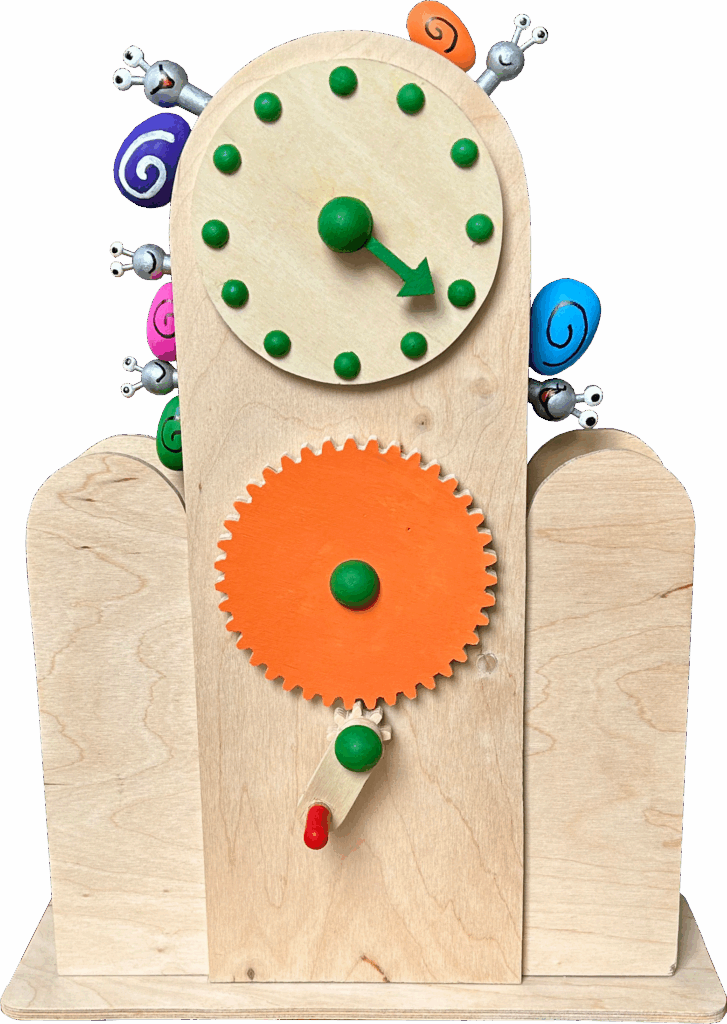
The Idea
An old English nursery rhyme from my childhood came into my mind one day –
Hickory dickory dock.
The mouse ran up the clock.
The clock struck one,
The mouse ran down,
Hickory dickory dock.
I thought that would be fun to make, so I looked for an easy way to make a mouse run up and down a clock. Searching around the Internet, I found a page showing a wooden tank, with caterpillar tracks https://woodgears.ca/tracked_vehicle/index.html including a link to some plans, which got me started. It seems like quite a jump from a tank to a slow tour around a clock, but it is essentially a chain made of wood. Along the way, the mouse transmogrified into a snail and not just one snail, but a whole family on an outing. Being snails of course they had to glide very slowly along. Snails have the advantage of having no legs, so I didn’t have to worry about any walking movements. Snails, slimy things that they are, are also surprisingly popular amongst the children that I know. Now the scene was set and I could set about making.
Making
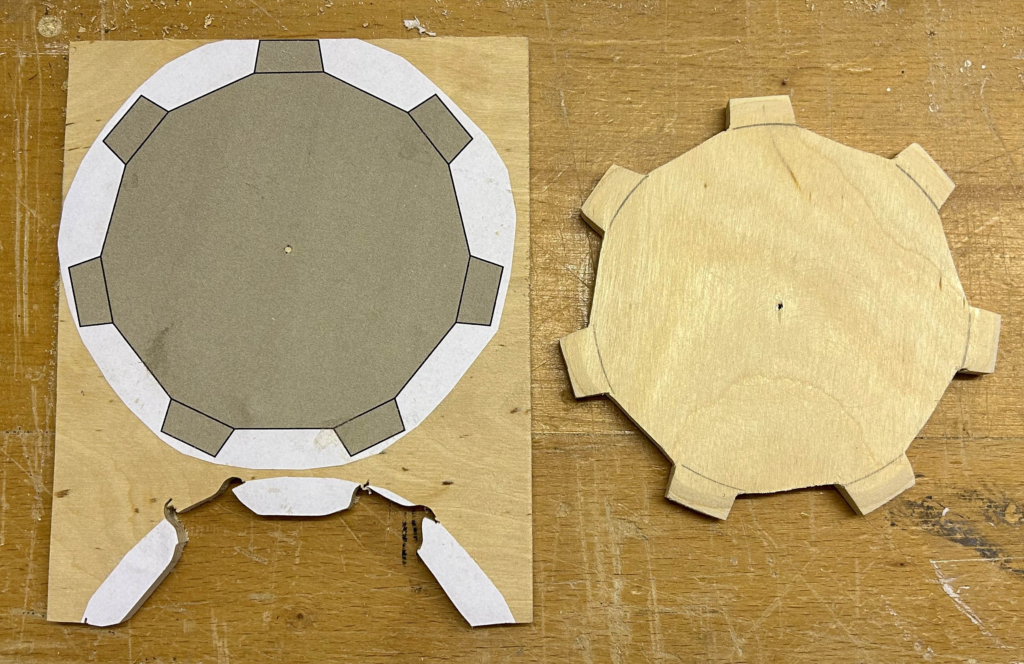
I copied the design for the sprockets from Matthias Wandel’s marvellous Woodgears page https://woodgears.ca/tracked_vehicle/plans.html. I printed out two copies onto paper, lightly glued them onto some plywood and cut them out with my scroll saw.
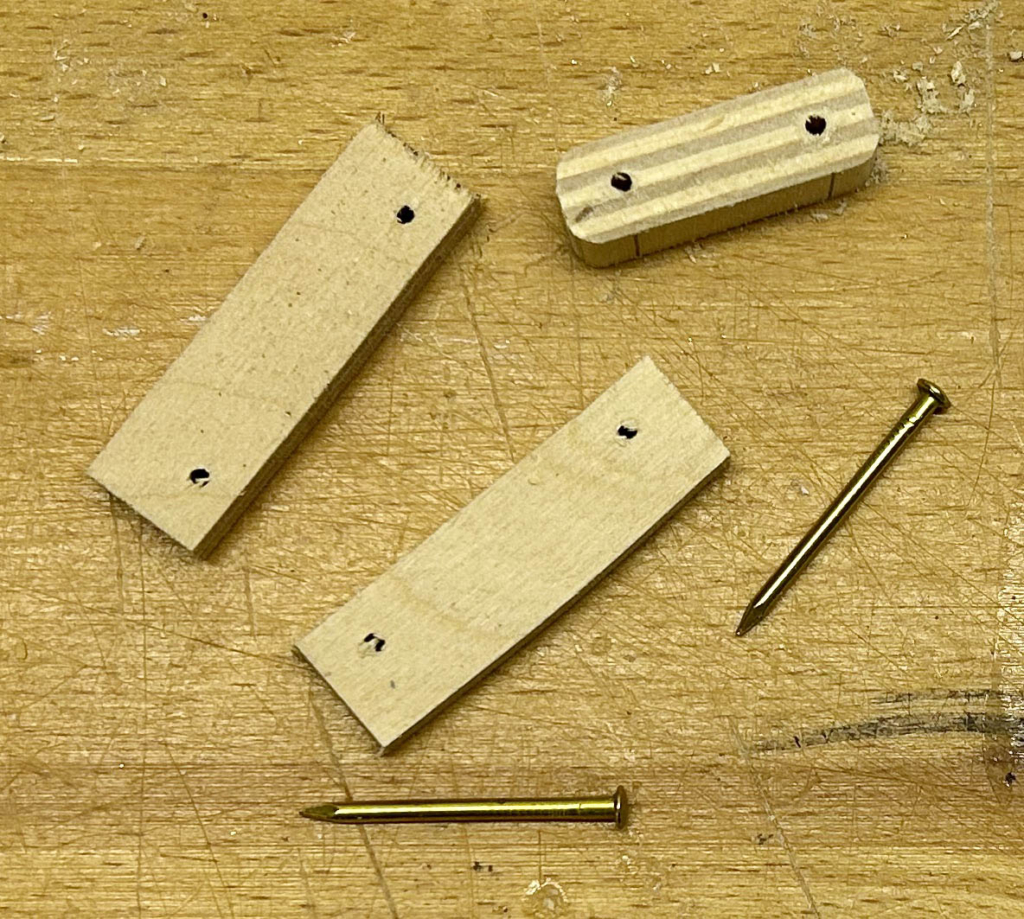
I used the dimensions from the same plan as the starting point for the links in the chain, tweaking the values by trial & error until they fitted well onto my sprockets on the workbench. I took care to then keep the hole spacings as consistent as possible.
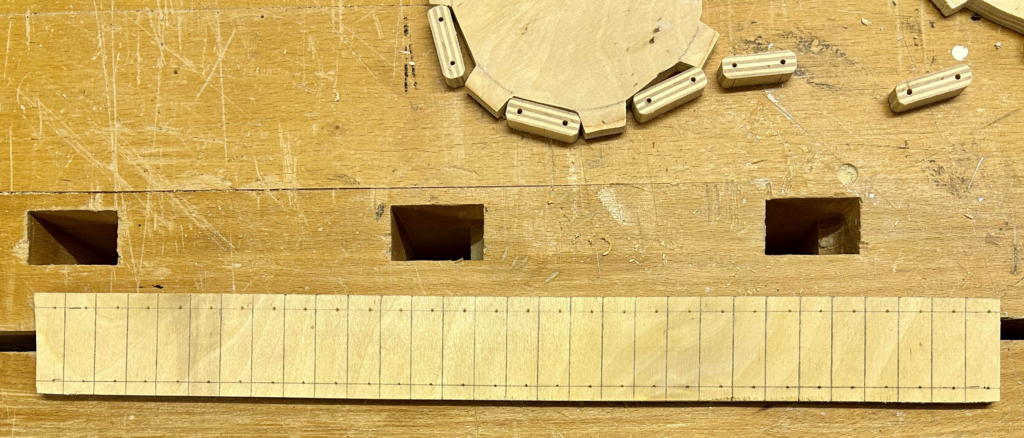
30 chain segments seemed to be about right.
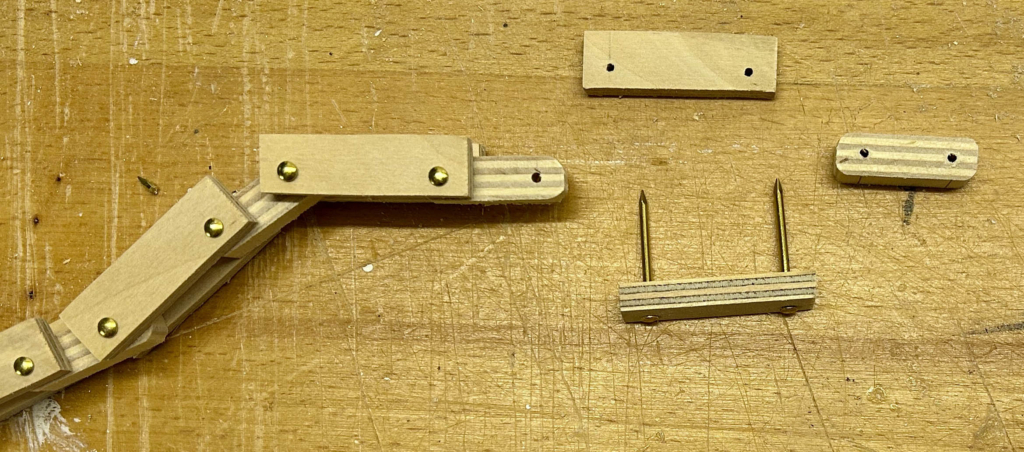
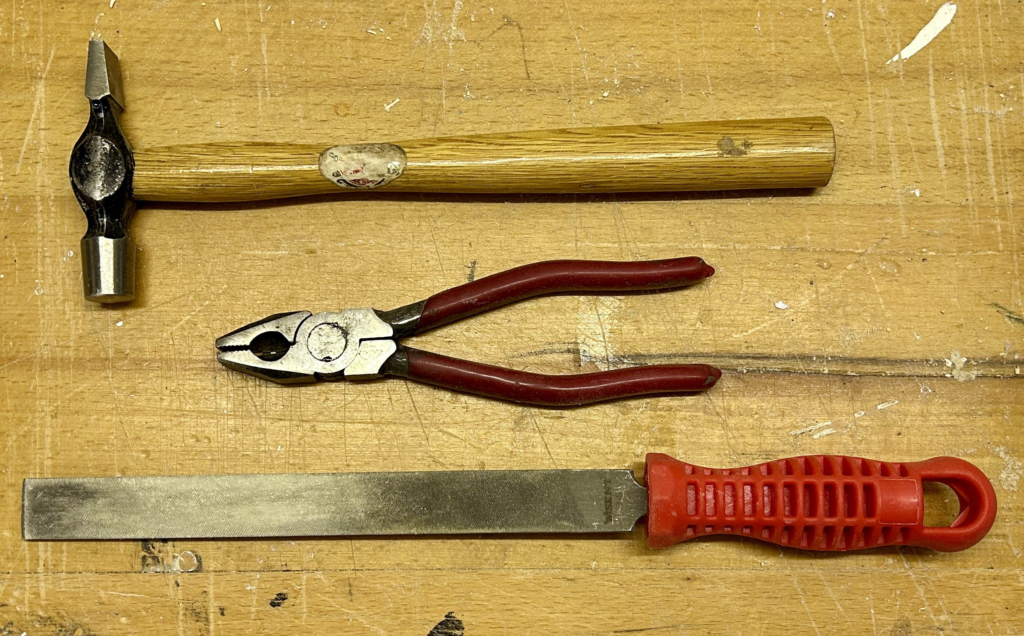
The holes drilled in the side pieces provided a tight fit for the brass nails. Slightly larger holes made for easy movement of the internal parts of each segment, allowing the chain to flex easily. The nails were a bit too long, so I cut them down with pliers and then filed the cut end until it was flush with the surface of the wood.
Once the chain was fully assembled, I sanded the sprocket teeth until everything seemed to move freely.
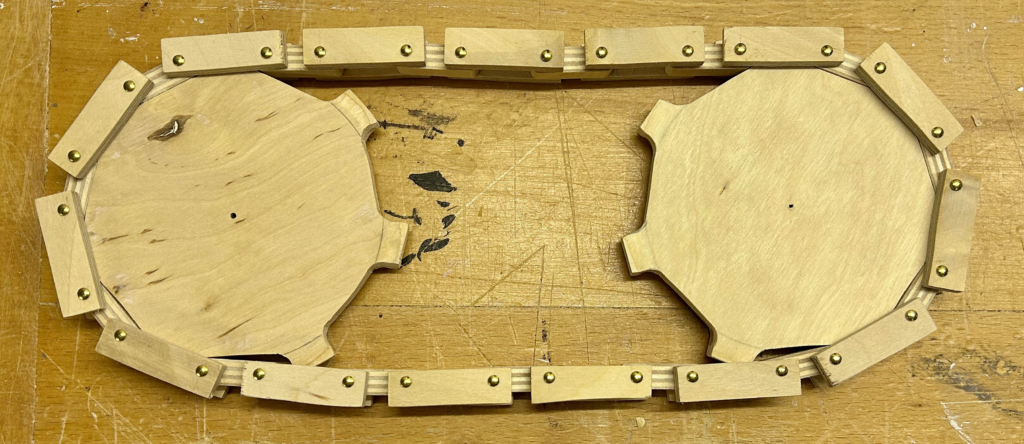
It now looks like a primitive bicycle chain, but I am going to turn it through 90 degrees and use it vertically, the sprockets now fitted to 8 mm diameter dowel.
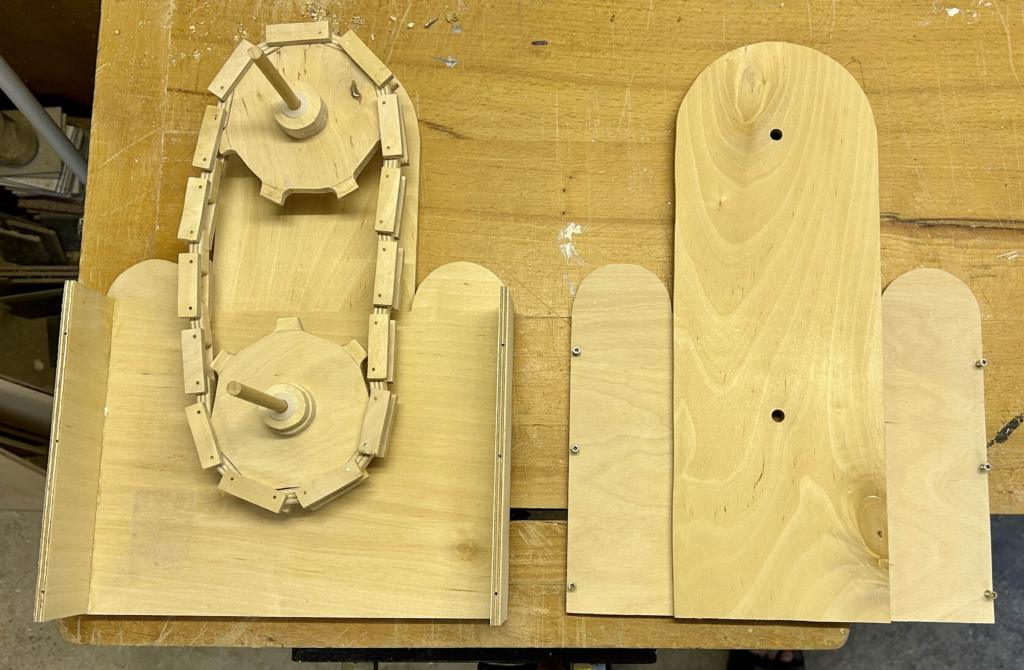
The clock case has space all around the chain to allow free passage of the snails. Once the case is closed, there is enough space for the whole snail family to wait out of sight.
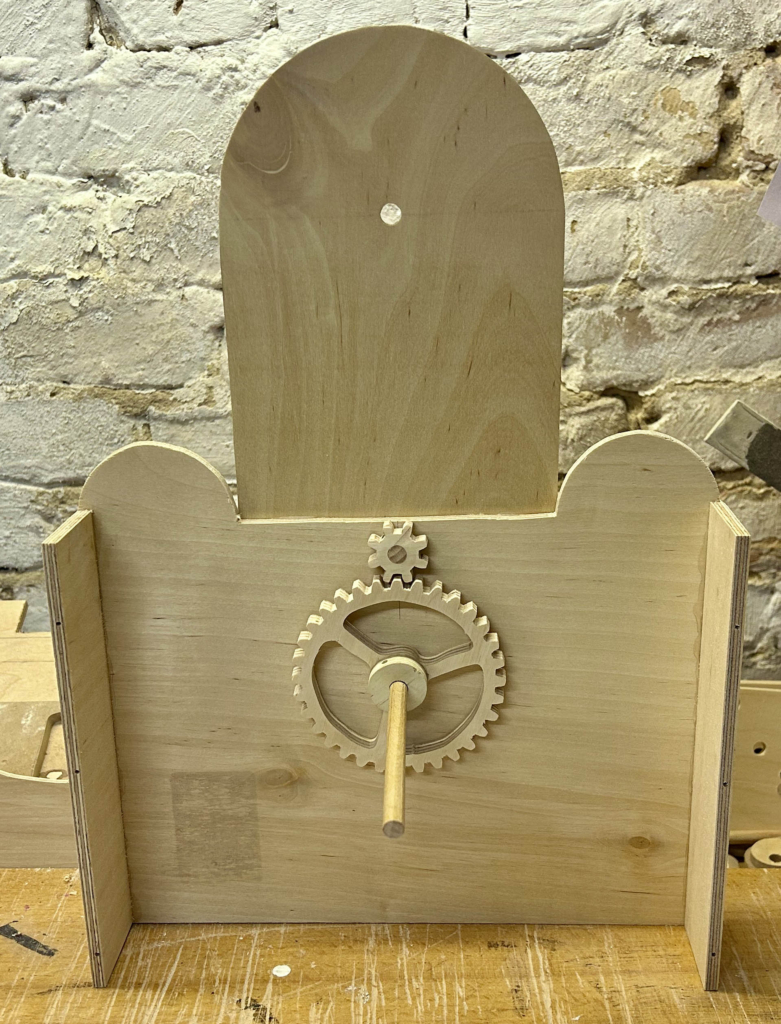
The lower chain sprocket is driven by the larger cog, which is itself driven by the small cog. The difference in size means that sprocket turns more slowly than the small cog.
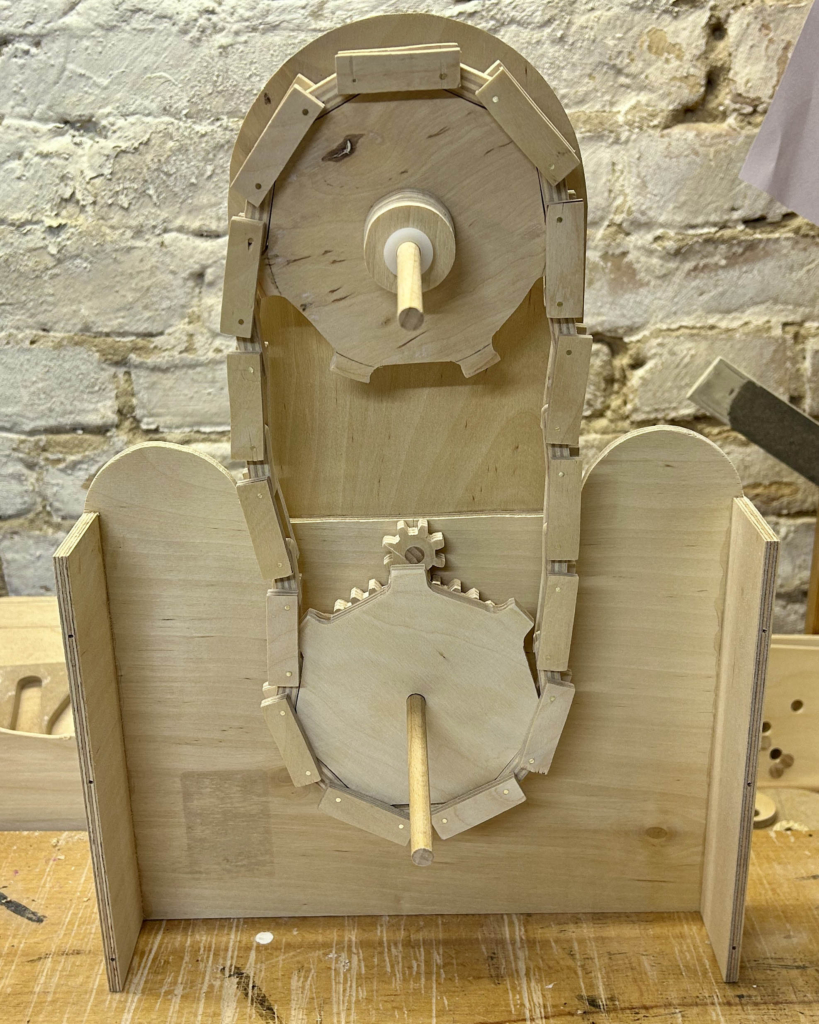
When I tried the mechanism at this stage, the chain moved much too quickly when the small cog was turned, so I had to slow the small cog down.
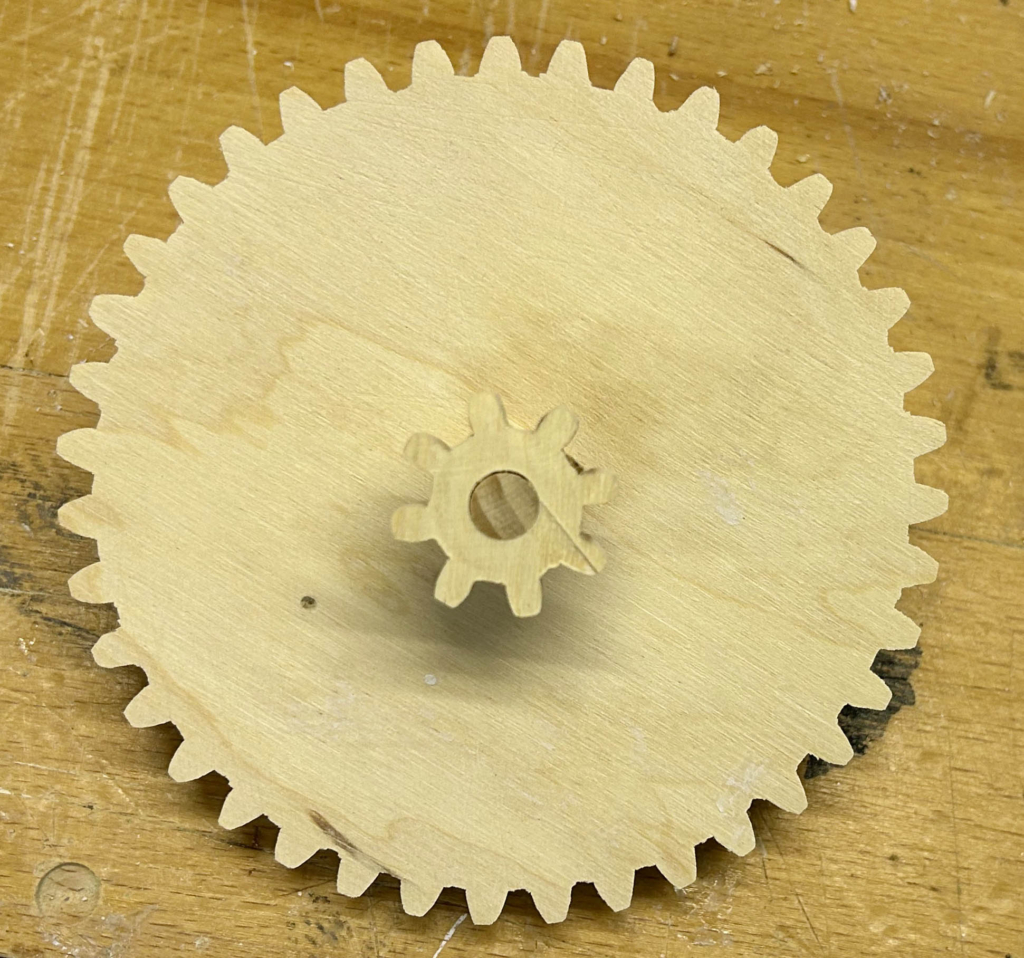
To slow the small cog, I added a large cog, outside the case, visible on the front. This external, large cog is driven by a second small cog, which is also outside and visible from the front.
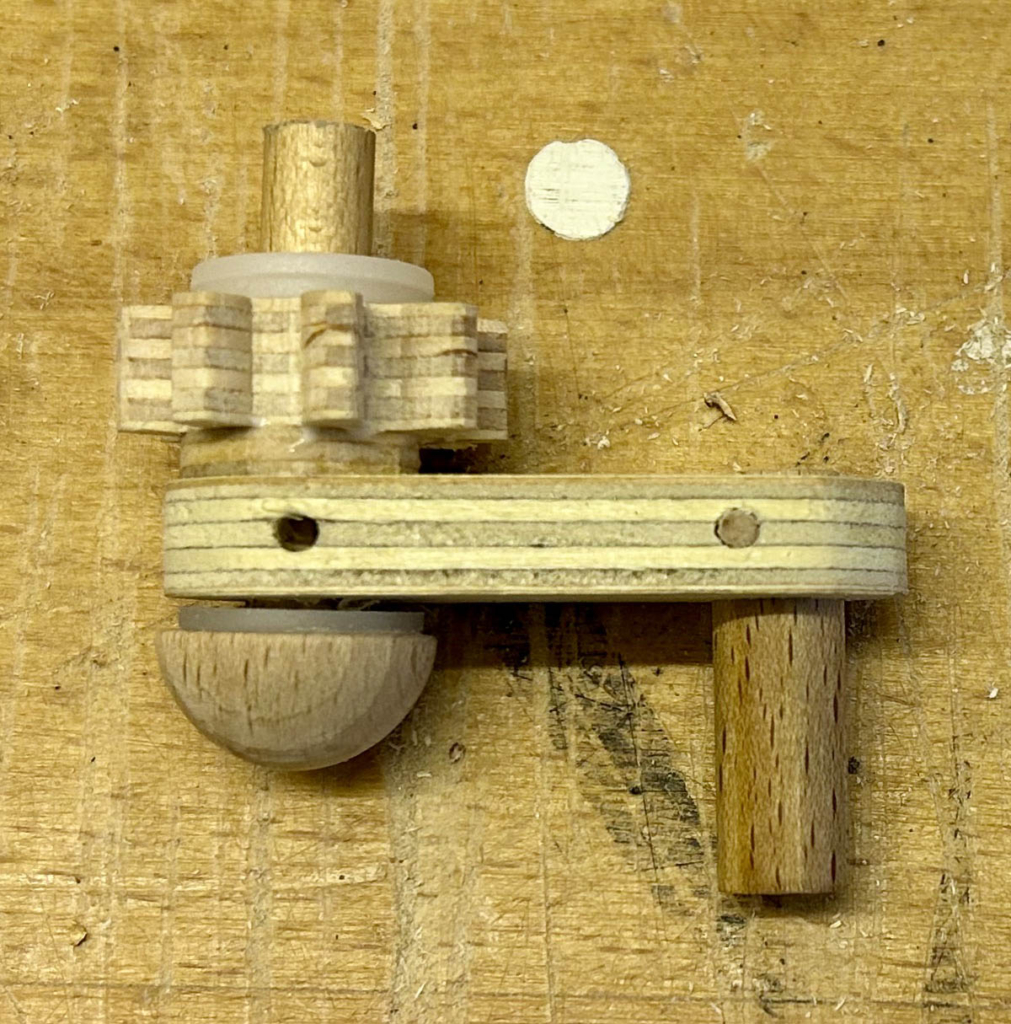
This slowed things down nicely to a snail’s pace.
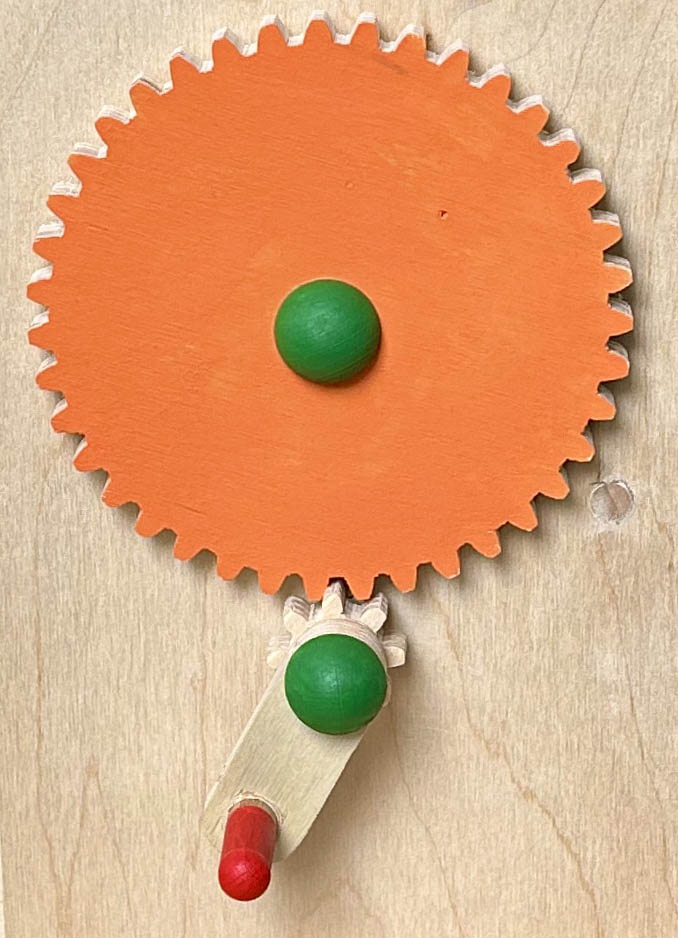
Showing external gears also reinforces the idea of a clock and adds moving interest.
The Snails
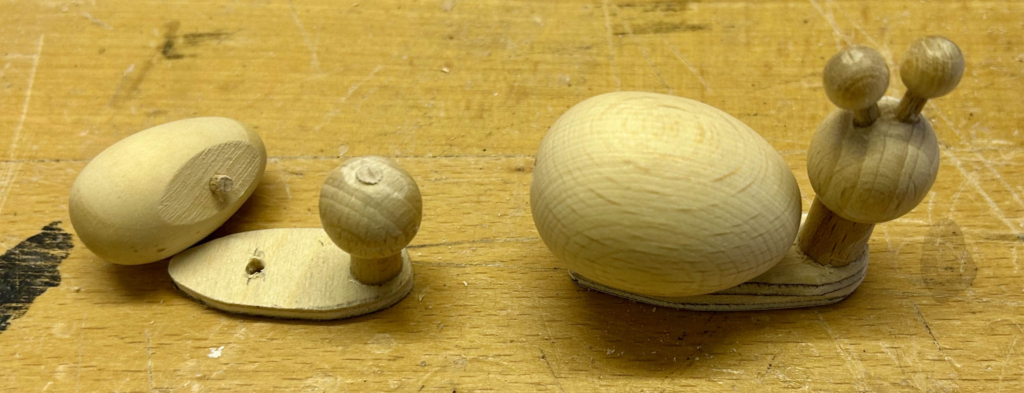
As I wanted to make a family of five snails, two big and three small, I chose a easy-to-make design using wooden eggs and balls.
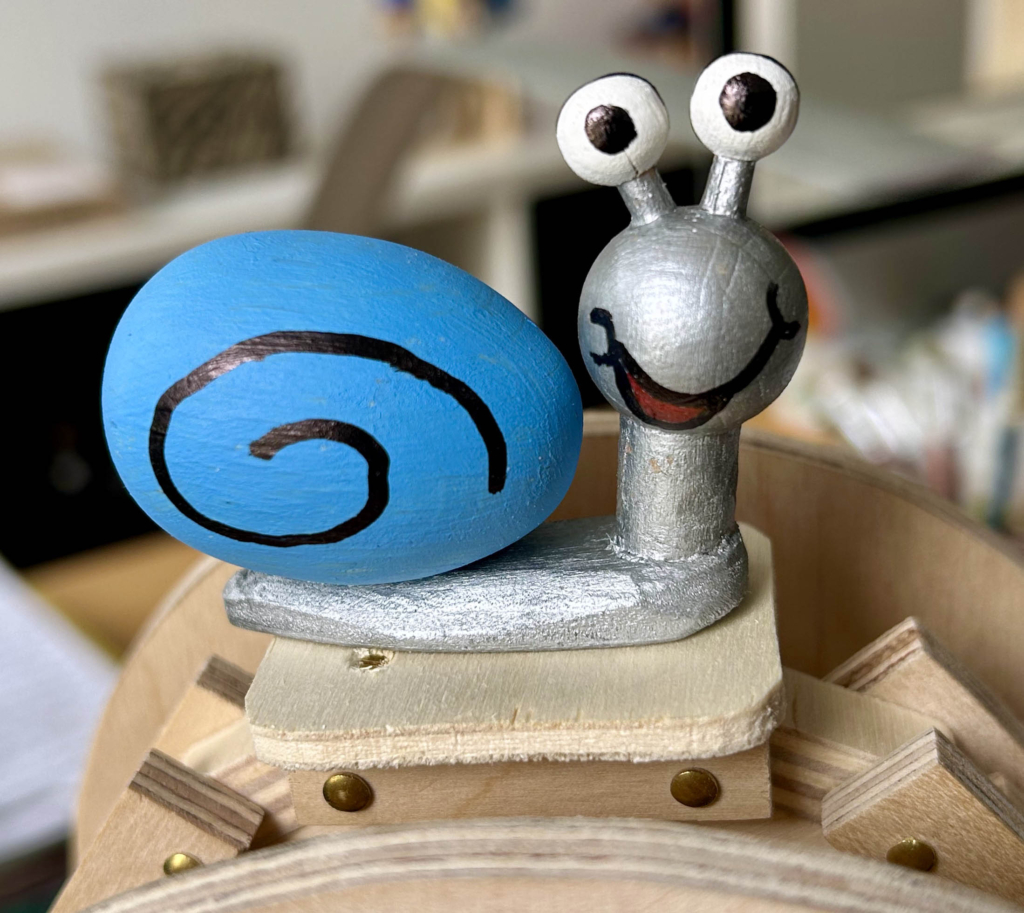
With a twirl of paint, I could suggest the spiral shape of a snail’s shell. Attached to a small piece of plywood, two screws are then sufficient to fix our snail to one segment of the chain. After asking three children what it is, they all replied “a snail”, so I was happy with my minimalist approach.
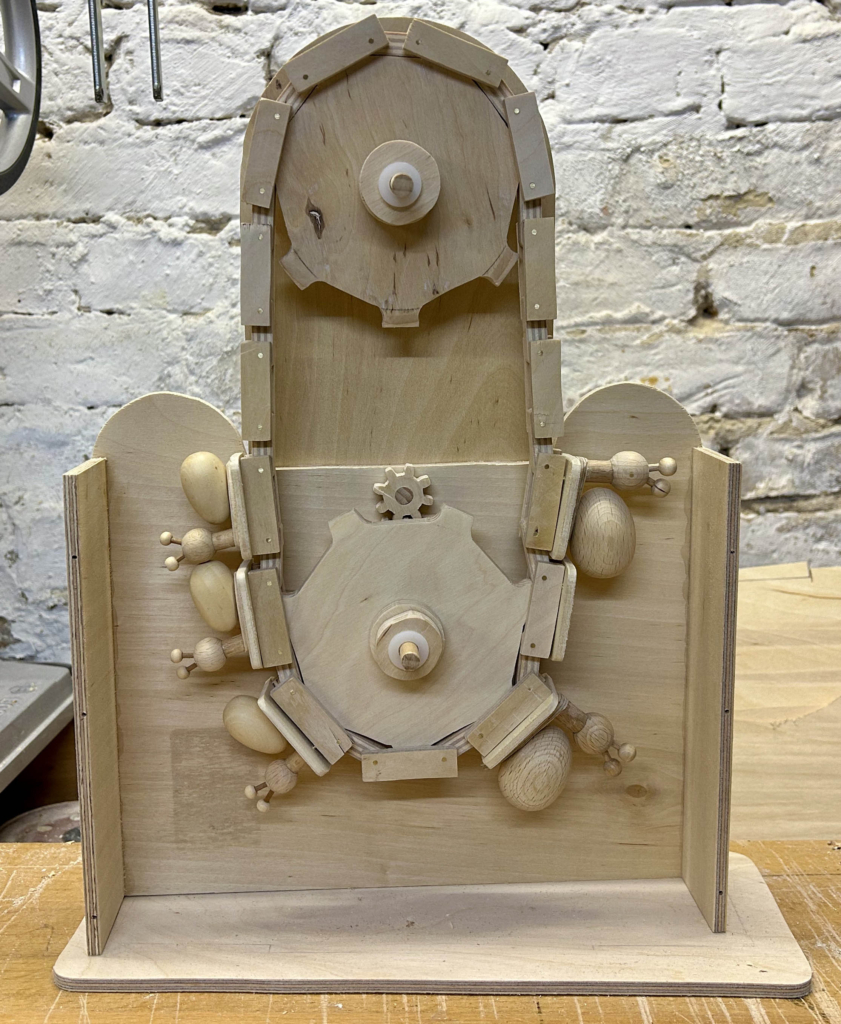
I spread the family of snails around so that they could all hide inside the case, ready to surprise a new viewer who turns the crank to make them slowly rise up the side of the clock. I thought about adding a ratchet, to limit the direction of rotation, but my first five-year-old test candidate immediately noticed the pointer on the clock face and insisted that it must turn clockwise or it wouldn’t be a real clock. Who can argue with that? So I left it so that you can turn the crank whichever way you fancy.
Reflections
With the second, external set of gearwheels, the snail family glide sedately out of their hidey-hole to enjoy some time at the top. There is something very comforting about their pace of life, taking things easy and being in no rush at all to get anywhere. Perhaps it’s a challenge – how slow can you go? Even on their way down from the pinnacle, they are happy that their time will come again and can patiently wait for their next turn.
Video
Link https://youtu.be/C2_sA1XB9_E
Images
Download here https://www.wordwise.de/Snails_Archive.zip