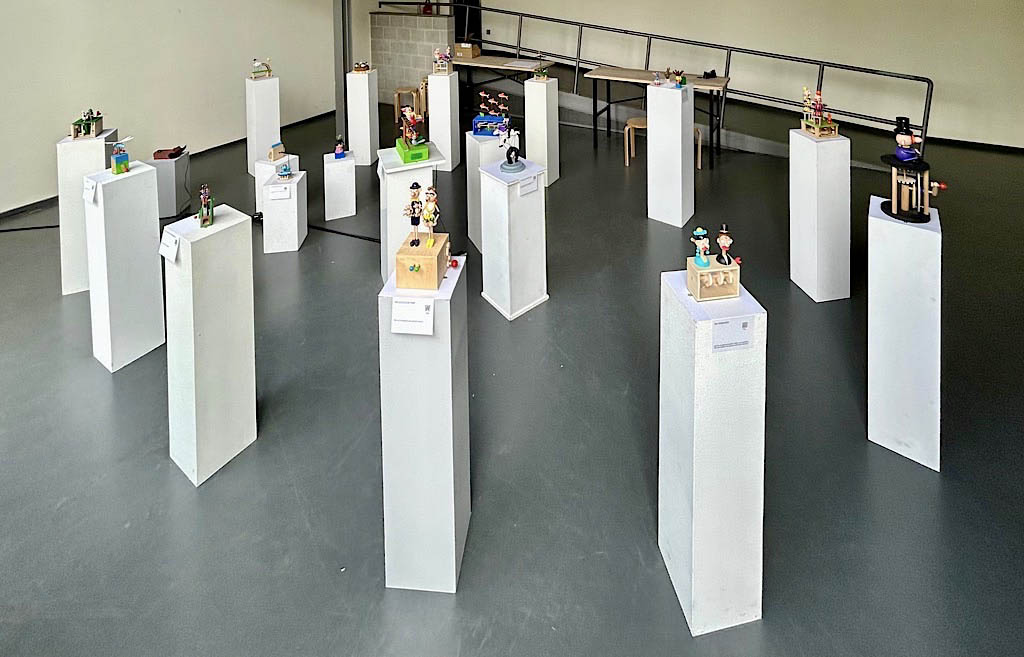
The exhibition space in Jena, Germany
A while ago an email arrived out of the blue asking whether I would be interested in showing some of my automata in an exhibition at the Imaginata museum in Jena, Germany (https://imaginata.de/). This museum quotes a fine motto attributed to Albert Einstein “Imagination is more important than knowledge”, which is why they called the museum Imaginata I suppose.
I have never done anything like this before so it was an interesting challenge to see what is involved and what it would mean to me. The curator, Matthias Richter, came to Berlin and we discussed what to show, how to show it, when to set it up and when to close it down. We also discussed a catalogue, a poster, a flyer and the vernissage or opening get-together. The museum would also arrange insurance, which meant that I had to dream up some prices, although I have no intention of selling anything.
What to Show?
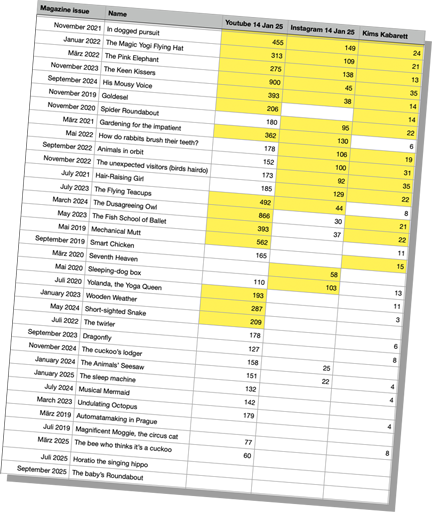
Choosing what to show was fairly easy. I collected the statistics available from the videos on my YouTube channel (https://www.youtube.com/@EngishmanInBerlin), on my Instagram account (https://www.instagram.com/kimskabarett/) and on my Kims Kabarett blog (https://kimskabarett.home.blog). I put these into a simple spreadsheet and produced a “popularity” metric. Those at the top of the list were in, apart from those which had become birthday presents, and I added a couple of personal favourites.
How to Show?
Matthias suggested putting each automaton on a pedestal. Ideally heavy enough that they are not easy to accidentally knock over. My workshop is not stuffed with things like that so Matthias called on the local artists’ association in Jena and arranged to borrow their collection of pedestals, mostly white in a variety of shapes. To reduce the risk of accidents, I decided to screw everything except the very smallest automata to the top of each pedestal. I screwed two metal straps to the bottom of each work and then drilled two holes in each pedestal for the fixing screws. At the end of the exhibition I disappeared those holes with some white wood filler.
Fixing automata to something heavy makes them easier to use as you no longer have to use one hand to hold the base steady whilst you turn the crank with the other hand.
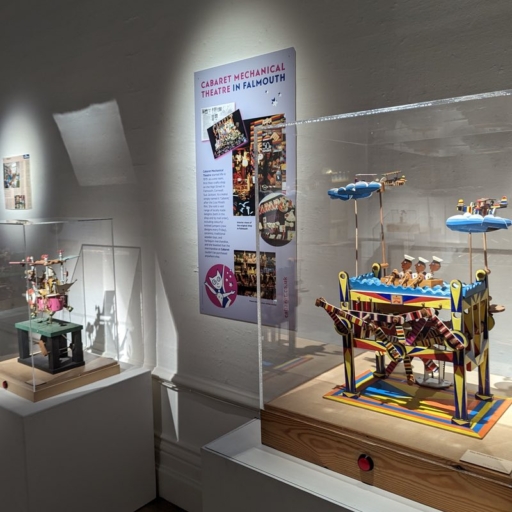
The photos that I have seen of the travelling CMT exhibition show each work enclosed in a perspex case on a wooden base. There is a button to turn the motor on which then drives the mechanism of the automata. This all keeps small fingers away from things that they shouldn’t touch.
I abandoned all thought of trying to do anything as professional as that and decided to allow visitors to touch anything that they felt like, accepting that I will need to do a couple of repairs when I bring everything back to Berlin. At the end of the month, the result was 3 from 23 automata needed repair.
- Wooden Weather – During construction I had forgotten to glue one wheel onto its drive shaft, so after much turning the wheel dropped off. This was a 60 second repair on the spot.
- The Magic Yogi Flying Hat – A small piece of dowel intended to limit the rotation of the owl dropped out after much turning. This was a two minute repair in the workshop. With hindsight this work needs quite a lot of force to turn, so I should either have taken steps to reduce the force needed, or dimensioned the stop to cope with the force.
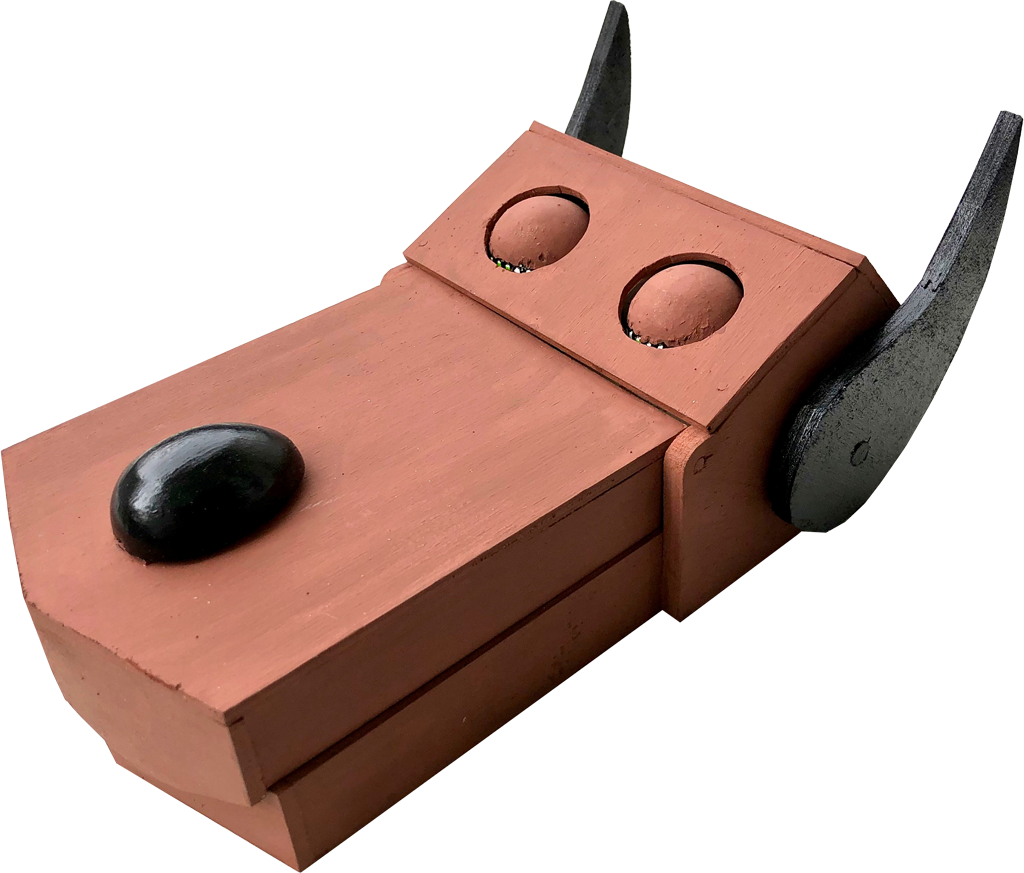
- Sleeping Dog – I originally made the operation of this deliberately obscure to add to the surprise. Unguided, a visitor sees a dogs head with two floppy ears, closed eyes and a shiny black nose. It is not obvious that the way to open the dog’s mouth is to slide his nose towards the front of the box. Inevitably, curious hands grabbed at the ears to see if that made things happen. Furiously wagging the ears to and fro was not what I had reckoned with, so things fell to pieces. This will take a couple of hours in the workshop to fix. These days I use red paint to signal where you are supposed to operate an automaton to try and avoid misunderstandings.
I suppose the basic problem was that I had not considered weeks of intense unsupervised use as I was designing each piece. More experienced now, I might do some things differently – or then again I might not.
The Catalogue
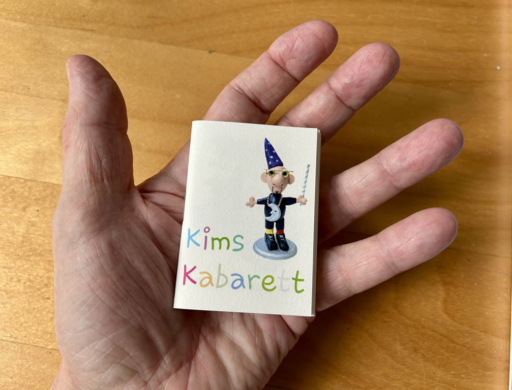
Some years ago, I had made a small booklet, showing some of my automata from that time. When I showed this to Matthias he agreed that this sort of format would be a fun approach to take.
I supplied images of each of the works to be exhibited and Matthias asked a young graphic artist to produce a small booklet. We also agreed to put a QR code next to each item. Scanning the code calls up a video showing the automaton concerned in action. Movement is the essence of an automaton and I thought that a video is the only way for visitors to take a real memento of their afternoon in the exhibition.
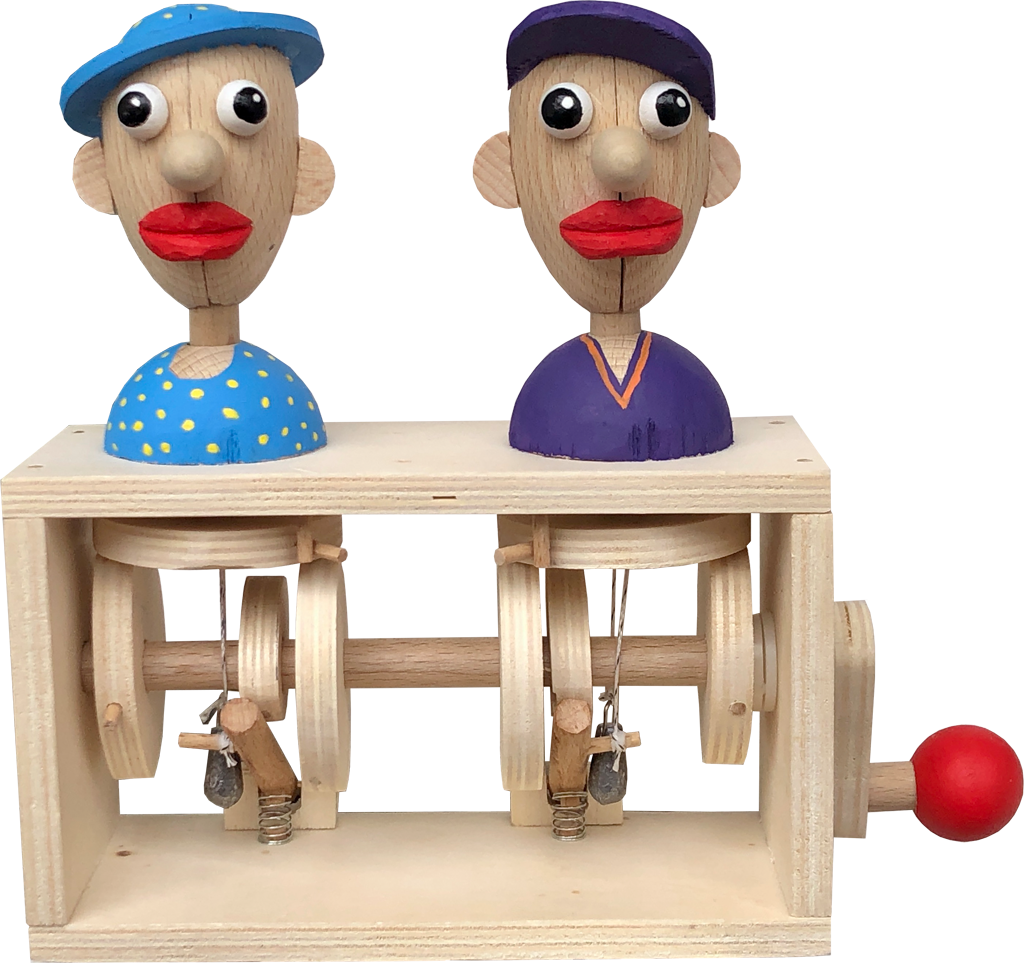
Of course, I was wrong and Jana Richtmeyer, the young artist (https://studio-jayeah.de/) knew better. She took the video of the Keen Kissers and from that made the catalogue into a flip book. Falk Keuten, the well-known automata blogger (https://spielundkunstmitmecha.apps-1and1.net) went to see the exhibition and wrote “I would also like to mention the delightful little catalogue that shows twenty exhibits using photos and motion via QR code. It is also a flip book for the animation of “Keen Kissers”! This should be done for every Automata book.“
There is a video showing the catalogue being flipped here: https://www.youtube.com/watch?v=K5-dmC9VM6E.
Visitors were asked to pay a small fee for the catalogue, not to make money, just to ensure that it was appreciated. Personally, I was as pleased as punch with the catalogue and it now has pride of place in my small collection of flip books.
The Opening Get-Together
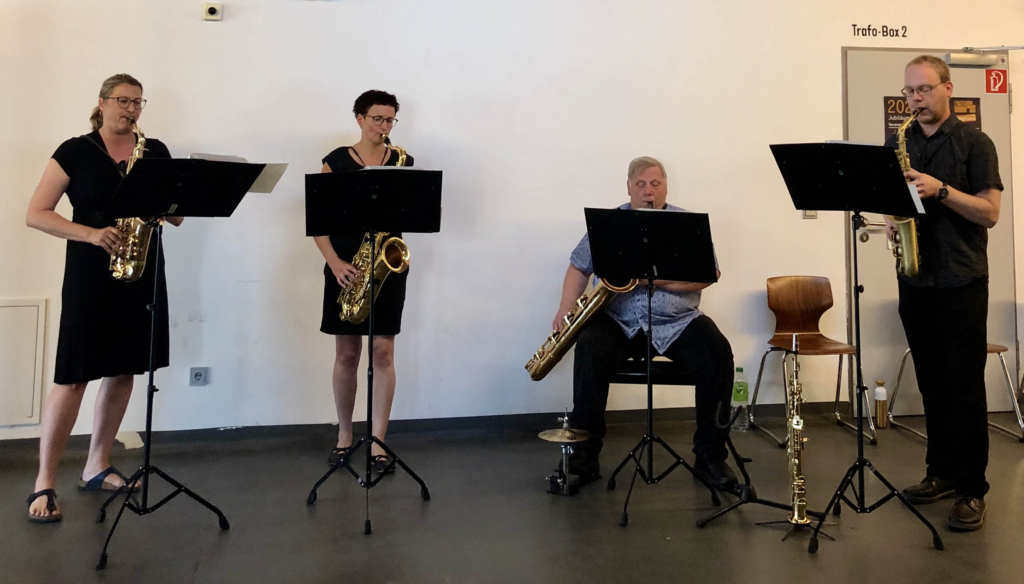
The museum organised a saxophone group to play during the opening get-together. Along with a finger-food buffet, this created the atmosphere of a party despite the formality of a few short introductory speeches.
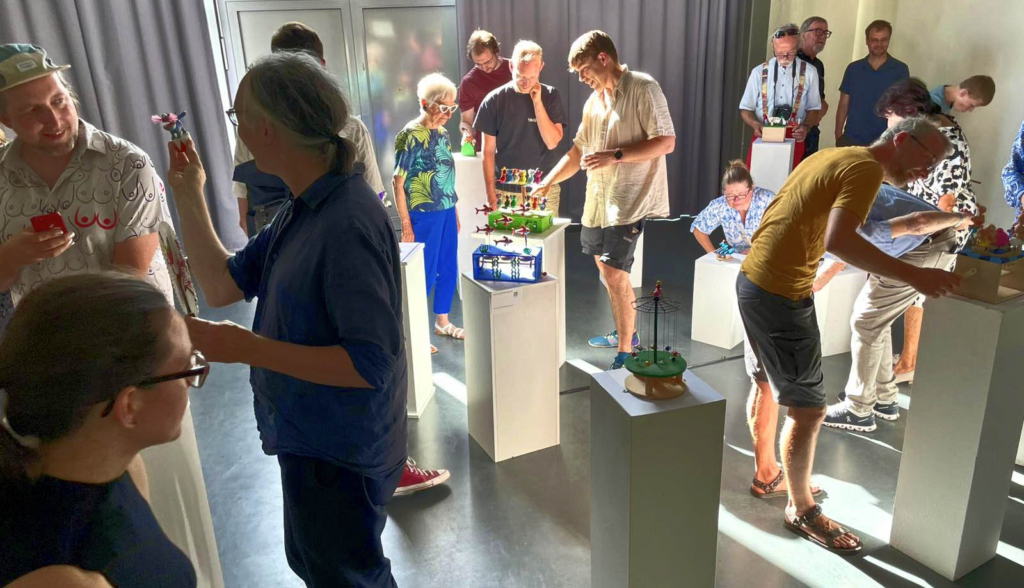
In contrast to conventional opening events for exhibitions of paintings/sculptures, visitors were busy interacting directly with the automata, working out what is actually going on with each piece. I found this was quite good fun, instead of standing around with a glass of wine and looking but not touching.
The Corner to Build Your Own Automaton
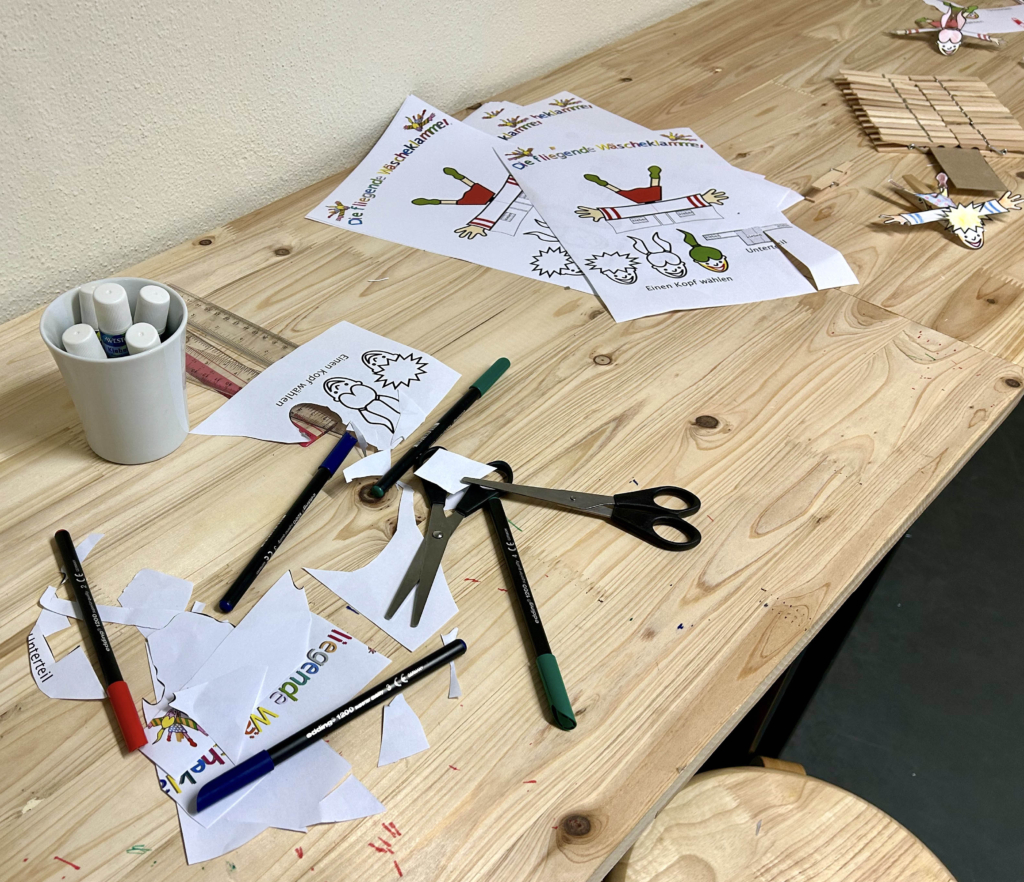
After the visitors have had fun interacting with the automata on display, both young and old had the opportunity of making their own, very simple automata “A Flying Clothes Peg”, on a table in the exhibition space. (https://www.youtube.com/watch?v=P8_O1J-BRIA) Hopefully this inspired a few people to see that making automata is not that difficult and to get stuck in themselves. The museum also organised a competition to encourage creativity at home. Visitors who made their own automaton were invited to send in a video of their creation and maybe win an exciting prize.
Transport To & Fro
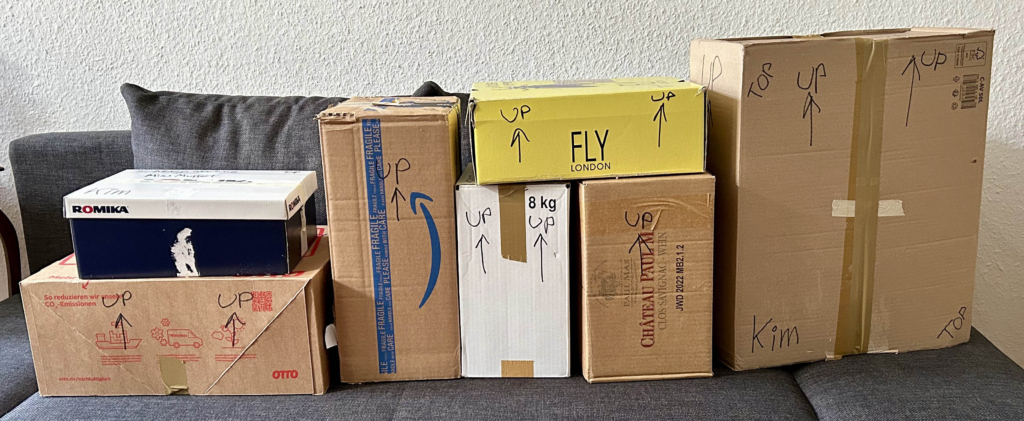
Transport was quite a challenge as everything had to be packaged so as to withstand a three hour drive from Berlin to Jena in the back of my camper van. Wrapping up in bubble wrap protected the paintwork and I filled the remaining gaps with scrunched up newspaper to try and prevent things from moving about inside the box. Turning most of my automata upside down would not be good for their health, so I marked every box with arrows to remind myself which way is up. I was concerned what vibration might do, but nothing seemed to have suffered when I unpacked. I was personally doing the handling and driving, I can’t imagine sending one of my automata by post, or via a courier service. That would really require carefully custom-made packaging for every single piece.
Reflections
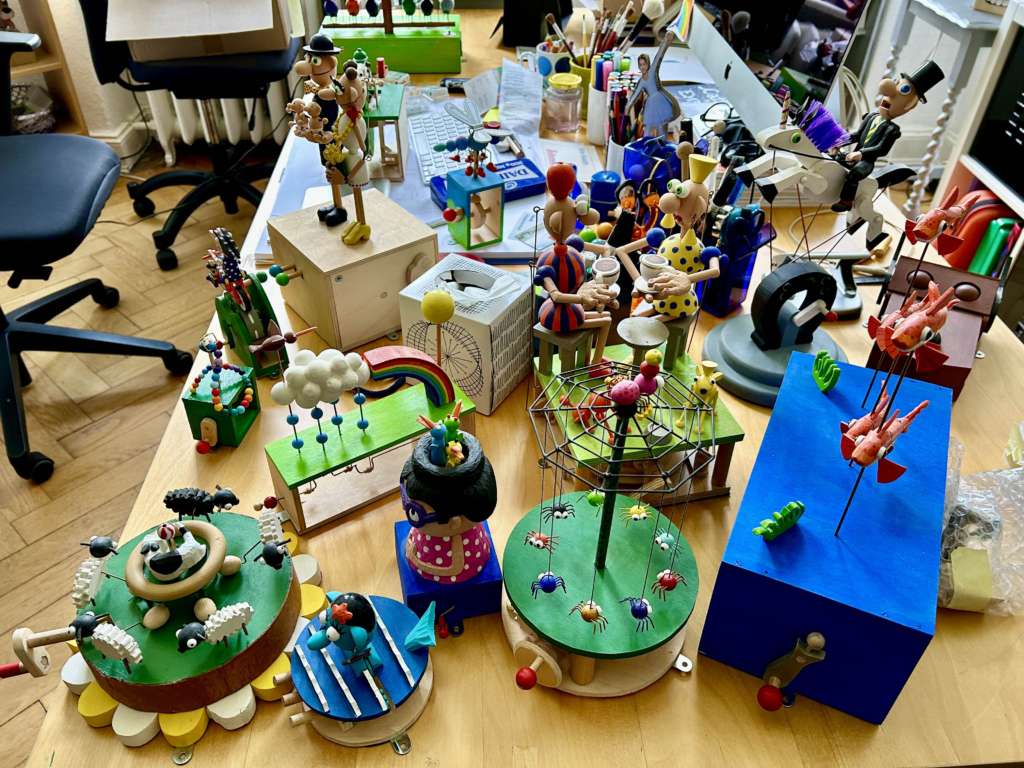
Seeing my automata fixed onto well-spaced on pedestals made a very different impression to what is often a rather chaotic setup in our apartment. I always enjoy seeing individual friends interact with my automata and it was also fun seeing people that I didn’t know taking their first steps into my eccentric, fantastic world. If I was worried about how well my figures moved and how robust they are, no one else seemed bothered by that. I have tied a knot in my hanky to pay more attention to robustness in future, but I don’t regret the weaker aspects of some of my creations. I will mend what breaks and, if I have a good idea, I might improve bits here and there. All in all, I rather enjoyed the entire process.
Images
Download here https://www.wordwise.de/Exhibition_Archive.zip